FAPI Marketing Framework

Regain Control of

Marketing Operations

Building a modern marketing capability and infrastructure that is scalable and profitable through the FAPI Marketing Framework starts with a conversation.

FAPI Marketing Framework official

Supporting Business Leaders Address Modern Marketing Challenges

Chasefive is a marketing management consulting firm and software platform that helps organizations plan, execute, and measure marketing with a structured, data-driven approach. Built on the FAPI Marketing Framework™, it aligns strategy, resources, and performance to improve productivity, accountability, and ROI.

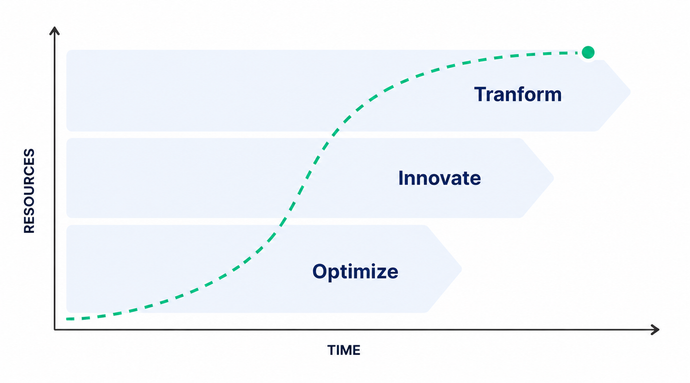
Change marketing direction

Re-engineer your marketing model to shift the marketing direction and alter your business's core value proposition, target audience, or channels to market

Identify marketing opportunities

Adopt a proactive approach in identifying and pursuing new marketing opportunities and technologies capitalizing on innovation

Improve marketing performance

Focus on enhancing your current marketing performance. Streamline marketing processes, capability resources and optimize execution potential

Marketing Management Consulting: Strategic Vision, Practical Support & Expert Knowledge

Customer success is our priority, whether it means developing marketing strategies and plans or supporting marketing execution. We provide comprehensive support and guidance to businesses at any stage of their marketing lifecycle by developing customized strategies tailored to each client's specific needs.

Marketing Strategy

Review your organization's overall approach and direction chosen to achieve its marketing objectives

Tactical Planning

Map the specific actions and initiatives that support the implementation of your strategy

Project Management

Develop a systematic process of planning, executing, and controlling marketing projects

Team Training

Enhance the skills, knowledge, and capability within a team to improve performance

Resources Planning

Evaluate and assessing the available resources, such as budget, personnel, and tools

Function Realignment

Reorganize the marketing functional area to align with strategic objectives

Creating Marketing Value Through Structured Marketing Strategy & Execution

We help you create tailored marketing experiences that recognize the unique and subjective nature of your organization's relationship with its customers, leading to effective, engaging, and ultimately more successful marketing performance.

An Integrated Approach to Improve

Marketing Productivity and ROI

Marketing Management

Consulting

Chasefive provides hands-on marketing management consulting to help organizations structure, align, and operationalize their marketing function. Working with business leaders, we define clear objectives, establish strategic direction, and translate plans into executable systems. 

Learn more

FAPI Marketing Framework™

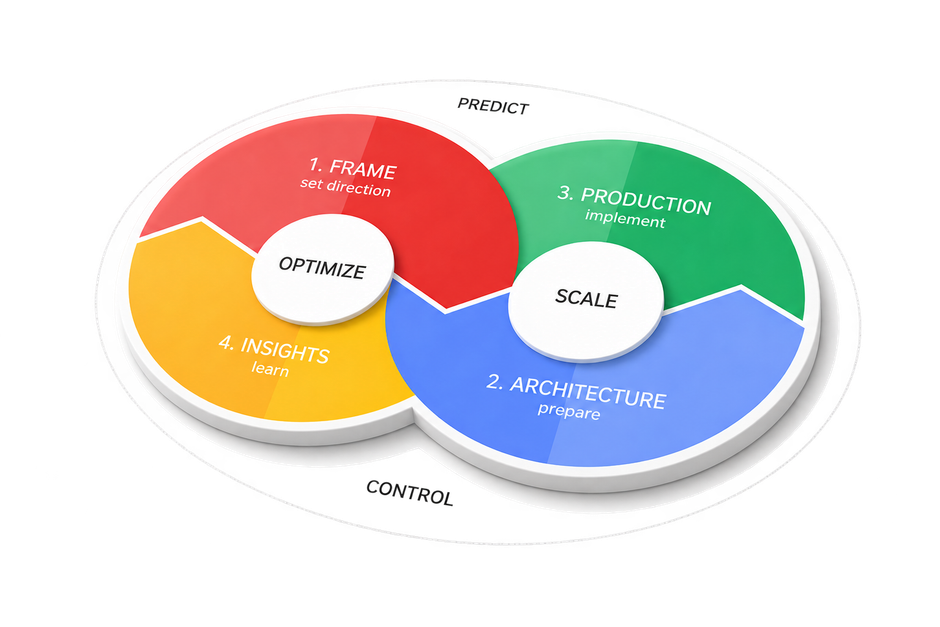
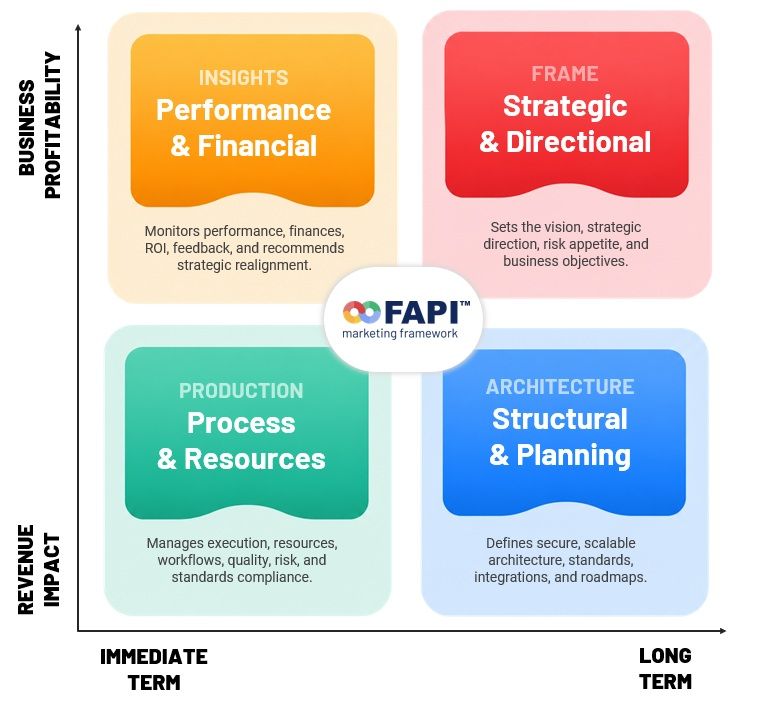
The FAPI Marketing Framework™ is Chasefive’s proprietary methodology for designing and managing marketing systems. Structured across four sequential modules—Frame, Architecture, Production, and Insights, it provides a complete model for encoding strategy, building execution systems, and measuring performance. 

Learn more

Marketing Architecture Management App

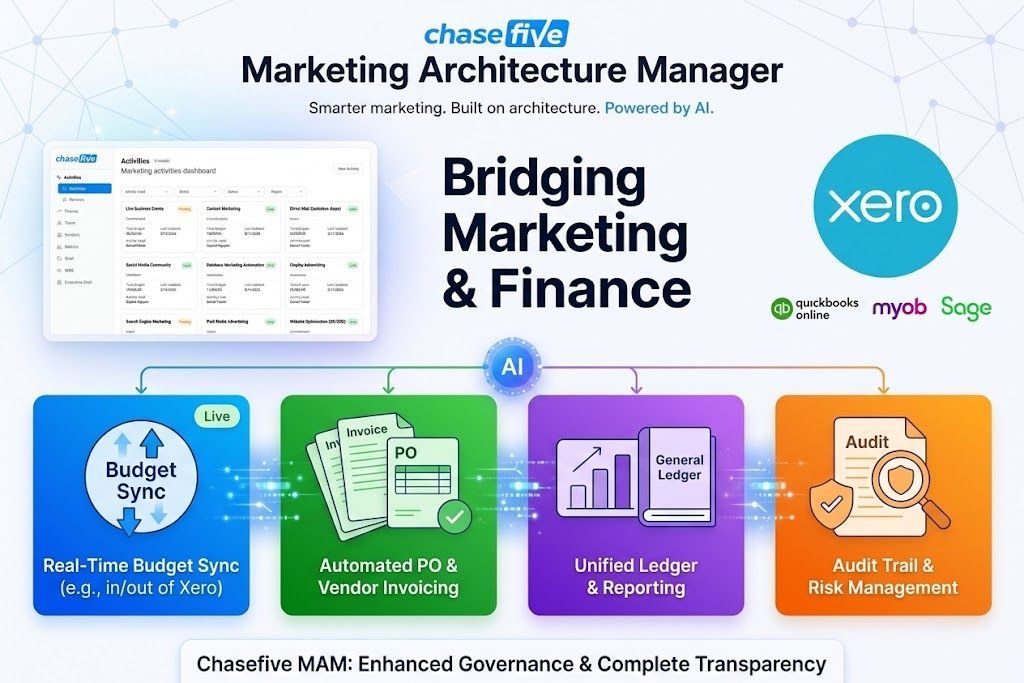
The Marketing Architecture Management (MAM) App is a purpose-built platform that acts as a control center for marketing operations. It centralizes marketing planning, budgeting, execution tracking, resources management and performance reporting in a single environment, enabling marketing management best practice.

Learn more

Marketing Resources & Insights

Find information and tools for individuals and organizations looking to enhance your team's marketing management skills. Practical guides, templates, and articles on various topics such as leadership, project management, and team building.

By Chasefive Management May 14, 2026
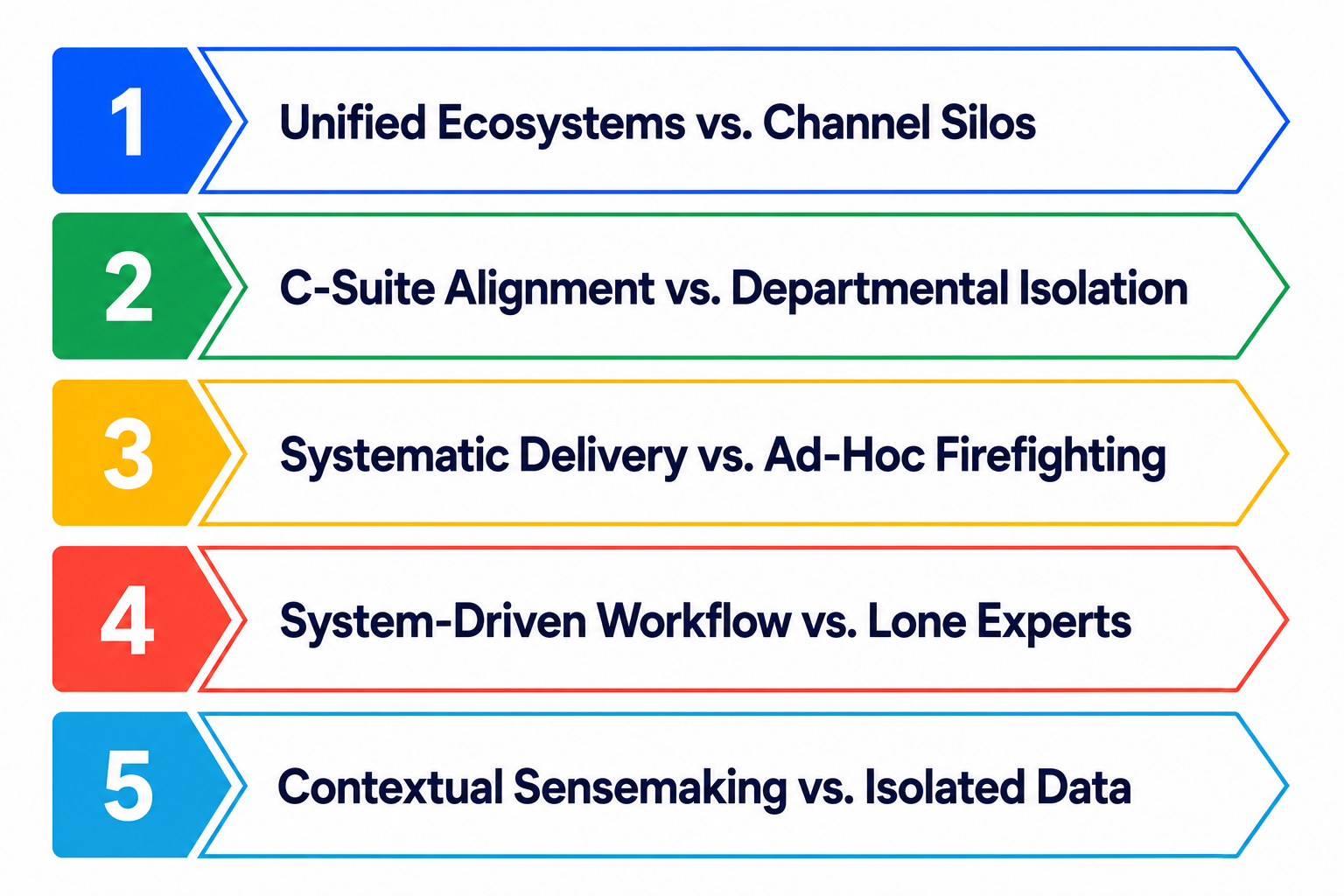
The marketing profession has long been synonymous with creativity, agility, and strategic innovation. Yet, beneath the surface of high-impact campaigns lies a growing systemic crisis. Findings from multiple surveys, including the Marketing Week Career & Salary Survey and the Gartner CMO Spend Survey, show that this is not due to a lack of individual resilience but to widespread structural burnout. Marketers are increasingly overwhelmed and emotionally exhausted, struggling to sustain long-term career goals as a direct result of organizational failures that have transformed marketing into one of the most operationally strained functions in modern business. The Drivers of a Breaking Point To address the crisis, we must first diagnose the deeper structural drivers that have pushed the industry to this precipice. Let’s identify the key drivers shaping this breakdown. The Justification Burden: Marketing has shifted from a growth engine to a defensive function. More than half of professionals feel undervalued and are trapped in a cycle of justifying every cent of spend against short‑term revenue instead of executing long‑term strategy. T he “Lone Expert” Expectation: Modern roles demand an impossible convergence of skills — strategy, analytics, SEO, AI integration and content production. This role fragmentation leads to cognitive overload and shallow output. Systemic Resource Gaps: Organisations frequently raise growth targets and add complex tech stacks without fixing underlying operational dysfunction. Teams are expected to do more with less while navigating unclear lines of accountability and broken processes. The Always‑On Culture: The digital nature of the field has blurred professional boundaries, leading to chronic sleep disruption, anxiety and a sense of detachment from professional purpose. Strategy Marginalisation: Leaders often view marketing only as the “creative department.” By excluding marketing from initial business planning, they force teams to retrofit or “decorate” strategies that may be fundamentally flawed or misaligned with the market. The KPI Metrics Divide: A structural lack of clear performance parameters — a fundamental disconnect between the granular, tactical data marketing teams track and the strategic outcomes business leaders expect. When marketers burn out, the business pays the price through reduced innovation, weakened brand equity, and the costly loss of institutional knowledge. Solving this requires more than wellness initiatives; it requires a fundamental redesign of how marketing is managed. Rebuilding the System: How the FAPI Marketing Framework™ Ends the Burnout Cycle True reform requires moving away from "firefighting" and toward a structured, sequential management system. The FAPI Marketing Framework™ directly addresses these root causes by introducing organizational clarity and operational discipline. 1. Restoring Strategic Clarity Burnout is fueled by shifting priorities. The Frame module of the FAPI Framework establishes long-term objectives and unified positioning at the leadership level before execution begins. By encoding strategy early, the framework eliminates the chaos of reactive short-termism, giving teams a stable foundation to build upon. 2. Solving Role Fragmentation To end the "one-person agency" expectation, the Architecture module decomposes strategy into defined user journeys and functional roles. By clarifying SOPs and Scopes of Work, the FAPI Marketing Framework creates operational specialization. Individuals no longer juggle disconnected responsibilities; they work within a structure that respects their expertise and capacity. 3. Bridging the KPI Divide Bridging the KPI divide, a primary driver of exhaustion is unfair accountability that holds production staff responsible for high-level revenue goals they cannot control; the Insights module resolves this by separating metrics so Production Executives can focus on execution and operational measures while the C‑Suite and Plan Masters carry responsibility for commercial impact and ROMI. This ensures everyone is judged on what they actually influence, reducing reporting fatigue and restoring professional confidence. 4. Transitioning to Managed Production Process chaos is replaced with discipline in the Production module. Through structured rituals, such as kickoff meetings and whiteboarding sessions, marketing moves from ad-hoc deployment to a managed production environment. This reduces the friction and "bottleneck" stress caused by poor execution systems. 5. Fostering Collaborative Leadership Finally, FAPI ends the isolation of the "lone expert." By involving "Functional Leads" from across the organization (IT, Sales, HR), marketing becomes a cross-functional team sport. Within this system, the Plan Master acts as a coach rather than a micromanager, removing roadblocks and fostering a Kaizen-inspired culture of continuous improvement.
By Chasefive Management May 11, 2026
Marketing teams are under increasing pressure to produce clear, actionable reports—yet much of their time is still spent compiling data rather than interpreting it. To address this, Chasefive has introduced new AI-powered functionality within its Marketing Architecture Manager (MAM) platform, designed to simplify reporting and streamline how marketing intelligence is shared across the organization. Reducing the Reporting Burden In many organizations, reporting remains fragmented—spread across tools, teams, and formats. This creates a consistent challenge: translating operational marketing data into insights that leadership can actually use. The new AI capabilities within Chasefive are built to reduce this friction. By automating key parts of the reporting process, the platform enables marketing teams to move away from manual compilation and toward structured, insight-driven reporting. The result is less time spent assembling reports, and more time spent acting on them.
By Chasefive Management April 28, 2026
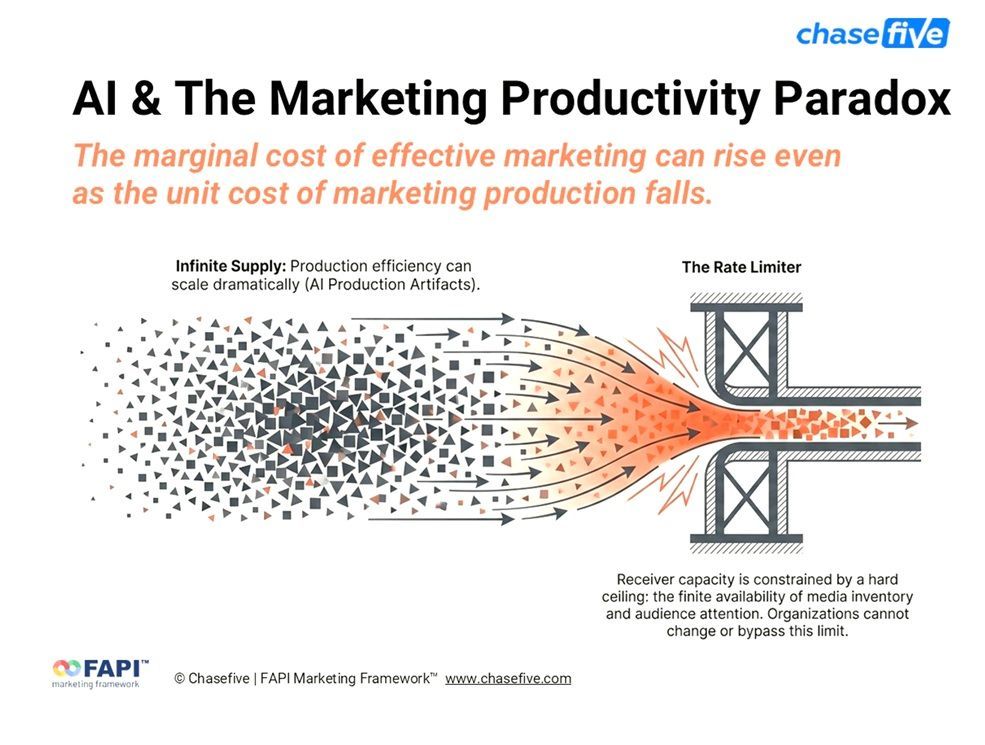
The marketing technology landscape has transitioned from a source of digital advantage to a profound structural burden. We have reached a saturation breaking point where innovation is outpacing the average organization’s capacity to operationalize it. Marketing teams use about 75 apps on average, many shared across departments. MarTech platforms are estimated to cost $50,000 to over $1M per year, yet remain only partially used because of poor adoption and lack of strategic alignment. Data indicate that there are now over 15,000 marketing SaaS solutions available globally, with growth accelerating at a compound annual growth rate (CAGR) of approximately 39% according to data published by Martech.org. This "SaaS sprawl" has created a critical paradox: while marketing teams are technically more capable than ever, they are increasingly paralyzed by the technical debt of their own ecosystems. The challenge for 2026 is no longer about gaining "access to martech capability"; it is the urgent requirement to rationalize, integrate, and govern martech capabilities already in play. The 20% rule: ending feature fatigue and the illusion of capability A primary driver of martech inefficiency is "Feature Fatigue," the phenomenon in which organizations pay for enterprise-grade power but typically utilize only 20% of a platform’s total functionality. This creates an "Illusion of Capability," where the remaining 80% of purchased features serve only to increase cognitive load and unnecessary complexity. The "Consolidation Opportunity" is often missed because of overlapping feature sets. For instance, an organization might maintain an "all-in-one marketing platform," utilizing its email marketing automation and landing page builder while simultaneously paying for a standalone "lead generation" tool purely for its lead scrapers and email verification features. This redundancy is not sophistication; it is a lack of architectural discipline. Unchecked accumulation of tools introduces friction across planning, execution, and reporting. The high price of the "integration tax": managing systems instead of strategy As stacks expand, so does the "integration tax." Marketing operations teams now spend an estimated 30–40% of their time managing integrations rather than executing strategy. In this environment, the "single source of truth" remains entirely theoretical. This operational drag is frequently disguised as sophistication, but it represents a fundamental failure of infrastructure. We see this when "intent data integration" from an ABM tool fails to sync with "commission management" in an affiliate platform, or when "sales & marketing alignment tools" cannot reconcile data with the primary CRM. When the "human middleware"—your staff—is forced to manually bridge these gaps, you are no longer running a strategy; you are babysitting a fragmented database. The governance gap: execution vs. infrastructure Market-share distribution reveals a dangerous imbalance: investment is heavily concentrated in the "doing" rather than the "governing." Execution and content: 40% (6,000 tools) focus on production and automation, Infrastructure and governance: only 17% (2,550 tools). This gap explains why many teams can produce high-velocity content but struggle to scale. Without robust infrastructure—features like "asset version control" and "digital brand guidelines"—the execution tools create chaos. A stack that prioritizes "ad decisioning logic" (ad server) without the guardrails of "brand sentiment monitoring" (brand management) is a liability, not an asset. The issue is no longer access to capability; it is the ability to rationalize that capability.
By Chasefive Management April 11, 2026
Navigating the regulatory landscape in 2026 requires more than a simple “legal check” at the end of a campaign; it demands the integration of compliance into the creative and operational process. Regulators—such as the FTC in the US, the ACCC in Australia, and the ASA in the UK—have shifted from reactive, complaint-based enforcement to proactive, AI-driven monitoring. Below are the key regulatory areas marketing managers must address today: 1. AI Governance and Transparency Artificial intelligence is no longer a “wild west.” If you use AI for content creation or targeting, you are legally accountable for its outputs. Mandatory disclosures: Many jurisdictions (e.g. New York’s 2026 laws) require conspicuous disclosure when an advertisement features a synthetic or AI-generated performer. Algorithmic bias: Ensure targeting algorithms do not inadvertently discriminate against protected classes (e.g. race, gender, age). AI claim substantiation: Regulators are cracking down on “AI-washing”—claiming a product is “AI-powered” when it is not, or exaggerating its capabilities. 2. Privacy and Data Sovereignty Consent has evolved from a “check-the-box” exercise into a dynamic and enforceable requirement. Granular consent: A single “Accept All” option is no longer sufficient. Users must be able to opt in or out of specific data uses (e.g. email, SMS, third-party tracking). Right to be forgotten: Marketing production teams must implement automated data-deletion processes, supported by audit trails to demonstrate compliance. Dark patterns: Deceptive UI practices—such as hiding unsubscribe options or using manipulative language—are now punishable under consumer protection laws. 3. Pricing Transparency (Anti–Drip Pricing) Regulators now apply a zero-tolerance approach to hidden fees and misleading pricing structures. Total price disclosure: Advertised prices must include all mandatory charges upfront. Adding fees at checkout (“drip pricing”) can result in significant penalties. Click-to-cancel requirements: If customers can subscribe online, they must be able to cancel online with comparable ease. Requiring phone-based cancellation is increasingly prohibited. 4. Contests, Sweepstakes, and Games of Chance Promotions must navigate increasingly strict gambling and consumer protection laws. Skill vs. chance: Clearly define whether a promotion is skill-based or chance-based. Games of chance may require permits or bonding, particularly for high-value prize pools. No-purchase requirement: Most sweepstakes must include a free Alternative Method of Entry (AMOE). Requiring payment or excessive data exchange without this option is non-compliant. Prize transparency: Disclose the Average Retail Value (ARV) and the odds of winning. “Up to” claims are heavily scrutinised. Platform liability: Social platforms require formal disclaimers stating they are not sponsors. Many jurisdictions also mandate publishing a winners list for a defined period. 5. Environmental and Ethical Claims (“Greenwashing”) Sustainability claims must be substantiated with verifiable, evidence-based support before publication. Specificity over generality: Broad claims such as “eco-friendly” or “green” must be supported by clear, credible, and preferably peer-reviewed evidence. Reviews and testimonials: Regulations such as the FTC’s Consumer Review Rule impose penalties for fake reviews, undisclosed endorsements, or suppression of negative feedback. 6. Influencer and Endorsement Compliance Endorsement transparency is now a legal obligation, not a best practice. Material connection disclosure: Any form of compensation—financial, product-based, or discount—must be clearly disclosed at the beginning of the content. Brand accountability: Brands are legally responsible for influencer compliance. Structured monitoring, guidelines, and audit processes are required. 7. Social Media Platform Compliance Social platforms are regulated advertising environments with shared accountability between brands and platforms. Platform policy alignment: Platforms such as Meta, LinkedIn, and TikTok enforce their own advertising rules, often exceeding legal requirements. Non-compliance can result in ad rejection, account suspension, or reduced reach. Disclosure and transparency: Sponsored content, affiliate links, and partnerships must be clearly disclosed. Regulators now actively monitor social content using AI-driven systems. User-generated content (UGC) liability: Republishing customer content transfers responsibility to the brand. Any misleading claims within UGC are treated as brand claims. Real-time moderation: Brands are expected to monitor and remove misleading or non-compliant claims in comments, particularly in regulated industries. Algorithmic amplification risk: Advertisers may be held accountable if platform algorithms disproportionately expose ads to vulnerable or restricted audiences. 8. Age Restrictions and Targeting Compliance Targeting is now a regulated activity. Defining an audience commercially is not sufficient—you must ensure it is legally permissible. Age-gated categories: Products such as alcohol, gambling, financial services, and supplements require strict age-based targeting controls. Underage exposure is strictly prohibited. Reasonable steps standard: Advertisers must take demonstrable steps to verify eligibility, including platform filters, first-party data validation, and exclusion criteria. Sensitive targeting restrictions: Targeting based on attributes such as health conditions, financial hardship, or ethnicity is heavily restricted or prohibited. AI and lookalike risks: Automated audience expansion tools can introduce non-compliant segments. Accountability remains with the advertiser. Jurisdictional variability: Age thresholds and targeting rules vary across regions. Global campaigns must dynamically adapt to local regulatory requirements. Compliance as Competitive Advantage: Embedding Trust into Marketing Strategy In a regulatory environment defined by real-time enforcement and increasing scrutiny, compliance is no longer a constraint—it is a competitive advantage. Marketing teams that embed compliance into their marketing strategy , architecture, and execution layers will not only mitigate risk but also build trust, credibility, and long-term brand equity. Now is the time to move beyond reactive compliance and adopt a structured, proactive approach that aligns legal, marketing, and commercial outcomes. Learn how to operationalise compliance within your marketing system and drive measurable business impact in the FAPI Marketing Framework Academy
By Chasefive Management March 30, 2026
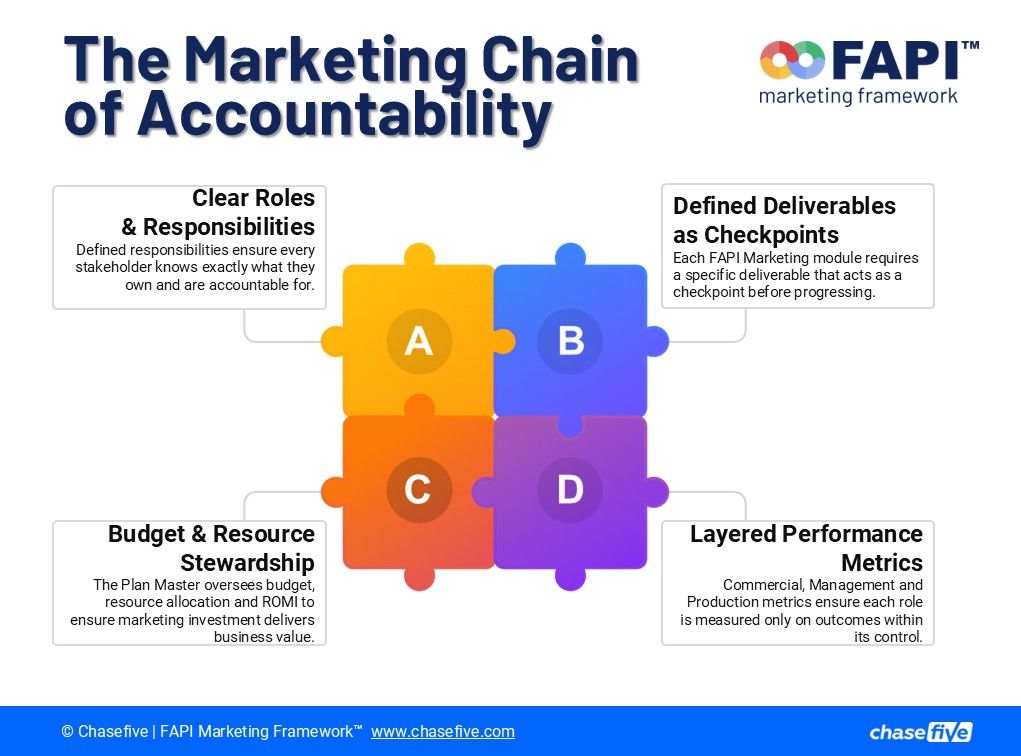
Modern marketers spend up to 20 hours per month compiling reports, yet a significant proportion of CEOs still express a lack of trust in their marketing reporting. This friction stems from the “Marketing KPI Divide”, a fundamental misalignment between the metrics tracked by marketing teams and the commercial outcomes expected by business leaders. The Root of the Marketing Reporting Disconnect The divide stems from two primary factors: the inherent complexity of the modern marketing environment and a tendency for teams to focus on reporting what happened (descriptive data) rather than explaining why it matters (strategic insight). Several structural hurdles prevent teams from delivering truly meaningful marketing intelligence: Fragmented data ecosystems: Disconnected tools that don’t talk to one another. Lack of standardized data models: Inconsistent naming conventions and metrics. Non-linear user journeys: Multi-touch paths that defy simple tracking. Weak attribution modeling: Difficulty in assigning value to specific touchpoints. Absence of benchmark targets: No "north star" to measure success against. Information governance issues: Poor data quality or restricted access. Lack of a unified reporting architecture: No standardized framework for how data is processed and presented. For data to function as a true decision-making asset it must be anchored to clearly defined targets. The FAPI Marketing Framework™ identifies target definition as a critical pillar of marketing data readiness. Teams must establish clear KPIs and benchmarks, supported by precise definitions that explain both what each metric represents and why it is being tracked. This creates organizational alignment around how success is measured and evaluated. AI: A Force Multiplier, Not a Fix Artificial intelligence can significantly reduce the reporting burden by automating data collection and aggregation. However, it cannot resolve the underlying KPI Divide. Because AI operates on top of existing systems, poor structural foundations result in: Faster reports that remain misaligned with business objectives More visually appealing dashboards that lack strategic relevance Increased data volume without improved decision-making AI enhances output efficiency, but it does not correct flawed system design. Reframing Reporting as a Decision System The FAPI Marketing Framework™ addresses this issue by redefining reporting as a multi-layered decision system within the Insights module.
By Chasefive Management March 16, 2026
In many organizations, sales and marketing operate as distinct islands with conflicting priorities. Marketing typically focuses on top-of-funnel brand awareness and lead volume, while sales is laser-focused on bottom-of-funnel conversion and closing deals. When these functions remain decoupled, the results are inevitable: inefficient spend, disjointed messaging, and a fragmented customer experience that ultimately stalls growth. The FAPI Marketing Framework™ (Frame – Architecture – Production – Insights) fundamentally rejects this isolation. It establishes a structured operational model where sales and marketing collaborate from the first spark of planning through to execution and performance analysis. By embedding sales expertise directly into marketing operations, the framework ensures every marketing dollar spent is a direct investment in revenue generation. The high cost of the marketing silo Traditional structures often view marketing as a "support function" rather than a revenue engine. This disconnect creates several systemic friction points: Blind Planning: Marketing develops campaigns without visibility into the real-world sales pipeline. Lead Friction: Sales teams are handed "qualified" leads that fail to meet actual commercial criteria. The Messaging Gap: Prospects experience a jarring shift in tone and value proposition when transitioning from marketing content to sales conversations. Vanity Metrics: Reporting focuses on clicks and views rather than tangible revenue impact. The FAPI framework solves this by weaving collaboration into the very fabric of the marketing operating model .
Show More

Ready for a chat?

Intrigued, interested, bewildered or simply would like to know more?

Book a Call

or call 072139 9873